







Greater Than has completed an independent, third-party validation of its artificial intelligence (AI) technology for predicting crash risk.
With an increase in the use of AI within the mobility landscape, validation is an important step for companies, providing stakeholders with confidence that technology used for the purpose of improving public safety is credible and trustworthy.
In line with these principles, Greater Than commissioned an independent review of its AI model by AI expert Anders Arpteg, Ph.D. Using the company’s Crash Probability Score as representation, the validation assessed the methodology, data handling, and performance reporting behind the company’s risk prediction model. It also evaluated whether its reported results were correctly calculated and supported by the underlying data.
“Following an independent technical validation, I confirm the scientific rigor of Greater Than’s Crash Probability Score,” said Independent Validator Anders Arpteg, Ph.D., Artificial Intelligence. “The report details a unique, data-intensive architecture and describes a transparent evaluation methodology that adheres to data science best practices.”
Greater Than’s AI is developed and operated in accordance with established Responsible AI principles, including transparency, fairness, accountability, privacy, and data protection. These principles are embedded throughout the model design, data handling, validation, and operational use of the Crash Probability Score.
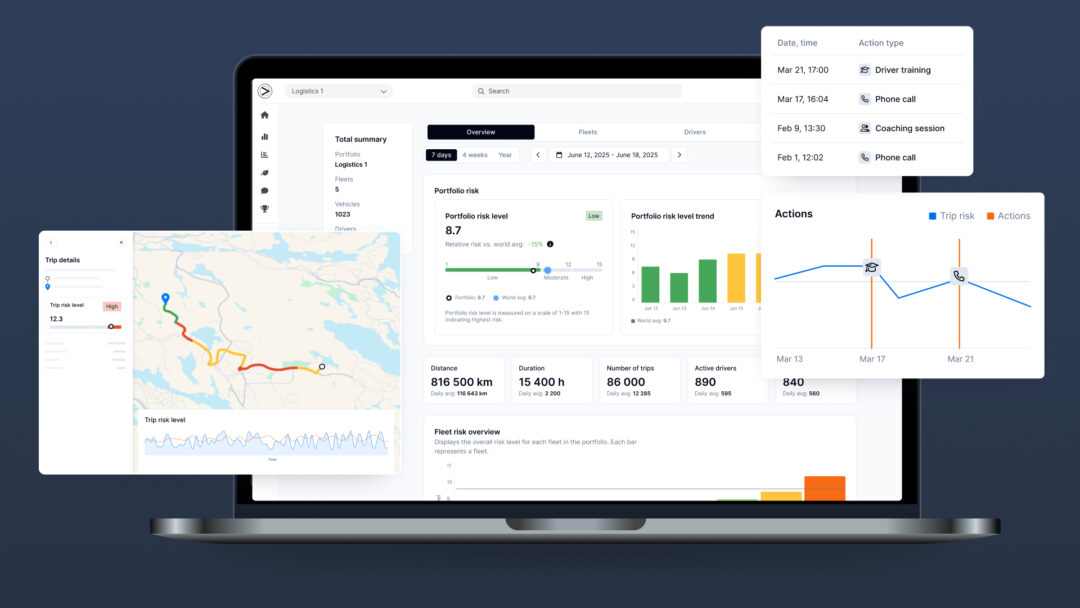
The Score is calculated by analyzing GPS data collected during vehicle trips. The Score is not intended to predict individual crashes with absolute certainty. Instead, it identifies a driver’s likelihood of being involved in a crash compared to other drivers within the same population or relative to a global reference.
A key differentiator of Greater Than’s approach is that it harmonizes driving data from any source, removing inconsistencies between systems, hardware, vehicle types, and regions. By working solely from GPS data, it ensures that every dataset – regardless of origin – is analyzed on equal terms, providing a holistic and comparable view of risk across any driving population.
The AI uses a machine learning model built for behavioral pattern recognition. The model analyzes GPS data throughout entire trips, transforming raw GPS signals into behavioral profiles that capture how each trip is driven. Each individual driving profile is compared against a database of over 7 billion real-world profiles linked to known safety outcomes, enabling the rapid prediction of crash probability and driver risk across geographies and vehicle types.
“A defining characteristic of this model is its foundation on actual real-world crash outcomes, rather than the proxy indicators, such as harsh braking, commonly used in the industry,” said Anders Arpteg. “Because crash events are statistically rare, effectively training an AI to predict them requires a massive volume of historical and global data. Given the model performance, it is clear that sufficient data from many years and countries has been used.”
The review confirmed that drivers with higher Crash Probability Scores were consistently associated with a disproportionate share of claims – regardless of geography, vehicle type of driver category.
Both at-fault and not-fault claims were included, reflecting the probabilistic nature of crash risk and avoiding bias related to fault determination.
The validation builds on more than two decades of AI development at Greater Than, during which the company has continuously strengthened its predictive model using driving data from across the globe.
“Trust and transparency are critical in the world of AI,” said Anders Lindelöf, Co-founder & Chief Technology Officer at Greater Than. “Given Anders Arpteg’s extensive background in AI, it’s an honor to have him perform a thorough evaluation of our AI so organizations can rely on our technology with confidence.”
As the use of AI expands across industries, the need for transparency increases. By completing this independent validation, the company aims to strengthen confidence in the responsible use of AI to improve safety and sustainability in mobility; both today and in the future.