







A new year always brings a sense of possibility – and an opportunity to pause, reflect, and look ahead. In road transportation, that feeling is particularly strong as we enter 2026, with mobility evolving at a rapid pace.
Vehicles are becoming smarter. Connectivity is increasing. AI is everywhere.
And yet, one thing remains unchanged: roads are still unpredictable, and road transportation continues to harm too many people.
It’s this challenge that has shaped our thinking as my colleagues and I share our predictions for the year ahead. We outline what we expect to change, the areas in which we expect organizations to prioritize, and explain why we feel driver behavior will come into sharper focus than ever before.
At Greater Than, we look at risk from one perspective: the human driver, and the role behavior plays in safe and sustainable outcomes.
In 2026, I believe this perspective will firmly resonate with organizations. As the mobility landscape continues to evolve and technology advances, it’s easy to focus on what’s new – but the driver is still there, dealing with constant change.
Yes, there is an argument that as autonomy increases, the driver will eventually become redundant. But until that future becomes a reality, drivers must manage more complexity than ever before. That makes protecting them more important, not less.
Looking even further ahead, as higher levels of autonomy become widespread, humans will still be in vehicles and risk will still exist. Keeping the driver at the core of our focus will ensure that, whatever else changes, the mission to get every driver home safely every day never does.
Today, most organizations understand their responsibilities when it comes to managing risk – both in terms of road safety and climate impact. But I believe 2026 will mark a turning point in how clearly organizations recognize the driver’s important role in these outcomes.
A familiar saying in business is, “If you can’t measure it, you can’t manage it.” For a long time, driver behavior has been measured through historic data or past “events” that don’t necessarily correlate directly with real outcomes.
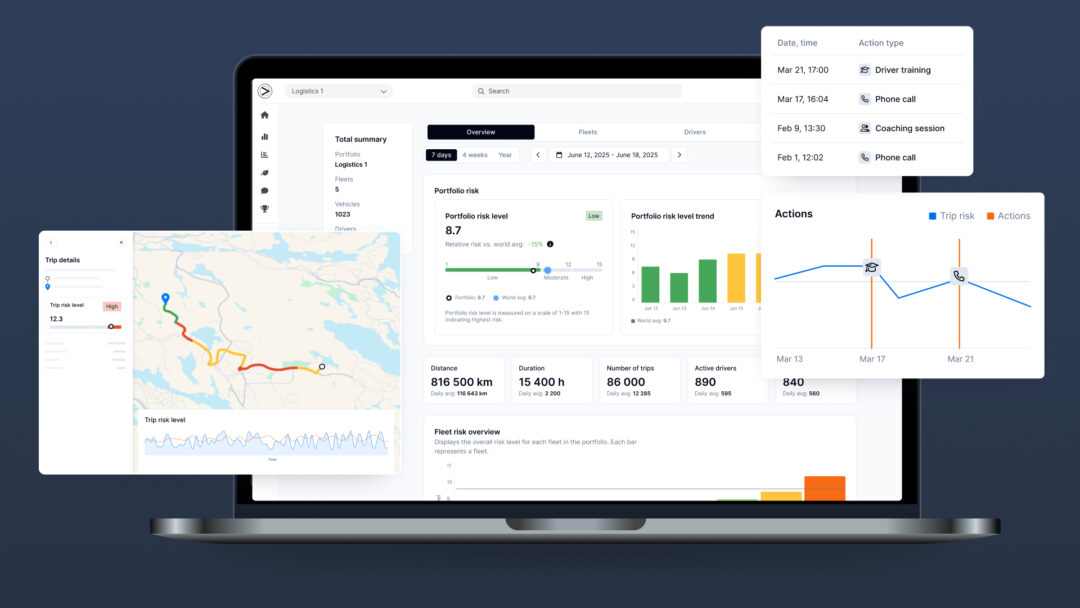
That is now changing. Predictive AI technology makes it possible for organizations to truly understand the driving behaviors that correspond with crash probability – and to see how risk builds over time. This means there’s no need to wait for crashes to happen; risk can be identified and managed before it becomes a problem.
As this becomes better understood, I expect more organizations to seek deeper behavioral insights. Not only to improve ROI on their investments, but to deliver on safety and sustainability targets and to ensure operations are genuinely safer and more sustainable.
AI is everywhere. Simply being an “AI company” or using AI is no longer impressive.
What matters to investors now is whether AI enables organizations to scale safely and profitably – while doing so responsibly. That requires trust: in the data, the models, and the outcomes.
In 2026, I believe it will become increasingly important to demonstrate the fairness and integrity of AI, including transparency, reliability, and data protection.
Just as important will be proving real-world impact. AI that can clearly show its value – and scale easily across organizations – is what will secure long-term investor confidence.
My prediction for 2026 is that data alone will no longer be sufficient for companies that work with driver risk. Organizations don’t just want to know who is at risk – they want to understand why, as well as what actions to take and when.
It’s not enough to highlight “event” indicators such as frequent speeding or harsh braking, especially when those indicators don’t consistently correlate with crashes. Organizations want behavioral insights that truly explain risk.
That means understanding the small, often invisible behaviors that accumulate into higher risk levels. These insights help organizations determine how to act on risk, and understand how to communicate more clearly and fairly with drivers.
When AI can explain risk – not just score it – trust increases. Not only from the organizations using the technology, but from drivers themselves.
On its own, data doesn’t prevent crashes. In 2026, I believe more organizations will fully recognize that insight only creates value when it leads to action.
Most organizations aren’t struggling to collect data anymore. The shift now is toward uncovering insights that are genuinely actionable – and acting on them consistently. Because real improvement happens when insights translate into practical interventions. In other words, giving the right guidance, at the right time, in a way drivers can understand and accept.
I also expect more organizations to explore new ways to engage with drivers. For example, through AI-generated feedback and coaching, and in more informal and interactive ways such as gamification and recognition.
Our predictions have one thing in common: understanding the person behind the wheel is crucial, and the more insights that are available about the driver, the more organizations can understand and act on risk – or build innovative solutions that help to make mobility safer.
Whatever else happens this year, we expect that the driver will be firmly in the spotlight and recognized as the heart of mobility solutions, guiding how technology, insight, and innovation come together to shape safer roads for everyone.