








Whether it’s an industry event, article or social media post, most discussions about the future of mobility are dominated by vehicle technology, infrastructure investment, electrification and regulation.
All of these are important. But they have one very important thing in common – they all ultimately rely on how people behave.
The driver remains one of the most influential factors in mobility outcomes, but the role of the driver in mobility receives far less attention than it deserves.
Whether we’re talking about road safety, sustainability, insurance or fleet performance, driver behavior is in fact one of the most important variables to consider.
Road safety is still largely managed reactively. Crashes are analyzed after they happen to identify and evaluate the contributory factors – and lessons learned. This work will always be important.
But, while vehicle safety continues to improve and infrastructure investments continue to be made, we also need to look more closely at driver behavior as a core factor influencing risk.
Let’s think about this in the real world. Two drivers in identical, high safety-rated vehicles could drive the exact same route, on the same road, at the same time of day – yet have very different risk profiles because of how they drive.
That is why understanding driver behavior is so important in road safety. It helps us see where risk is actually building, rather than only where incidents have already occurred.
Within mobility, most sustainability conversations are based around EV adoption, fuel choices, vehicle size, routing and infrastructure. Again, all of these matter. But the way a vehicle is driven also has a direct influence on fuel consumption, energy use and emissions.
Every decision behind the wheel plays a role – from speed choice and acceleration to braking, anticipation, following distance and journey planning.
In practice, two drivers using the same vehicle can have very different environmental impacts because of their driving style. In some cases, the behavioral impact of one driver in a smaller vehicle may be greater than that of another driver in a larger vehicle.
That is an important point, because once behavior can be understood and measured, it can also be improved.
Historically, organizations have relied on past incidents and claims to help understand driver behavior. Even more recent solutions tend to focus on “events” such as harsh braking, acceleration and speeding.
These signals can be useful, but they do not show the full picture. Because driver behavior is not defined by one isolated event – it is shaped by patterns. How a driver responds to different environments. How risk develops across a journey. How small decisions combine over time. How behavior changes in different situations.
This is where the conversation is starting to move forward.
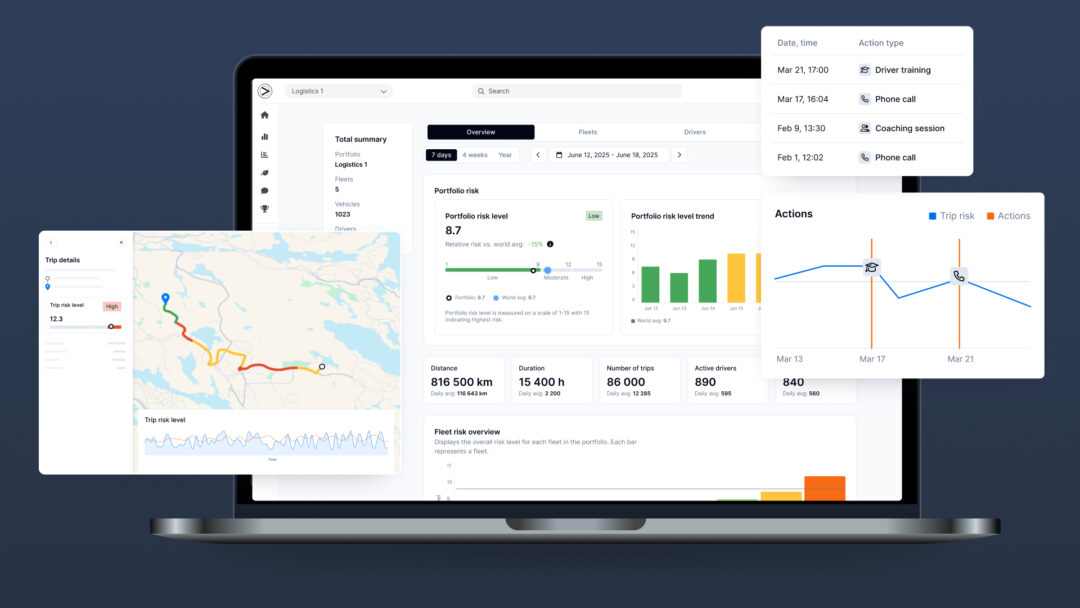
By looking at behavioral patterns rather than isolated events, organizations can begin to understand not just what happened, but where risk is developing and how behavior is influencing safety and sustainability outcomes.
We are seeing a definite shift in the mobility industry from reactive to predictive. This is coming at a time when the industry is under pressure to reduce crashes, lower emissions, manage operational costs and improve efficiency. Driver behavior is an integral aspect of all these areas – which is why it deserves a much bigger role in road safety and sustainability conversations.
If we only focus on vehicles, infrastructure and regulation, we miss an important part of the picture. If we understand how people actually behave behind the wheel, we can make better decisions about where to act, how to support drivers and how to reduce risk before harm occurs.