





 When a company experiences predictive AI for the first time, the initial reaction is often surprise – particularly when they discover that their highest area of risk isn’t necessarily where they expected it to be. As part of Greater Than’s customer success team, this is something Axel Frick gets to witness first-hand – and here, he shares his observations.
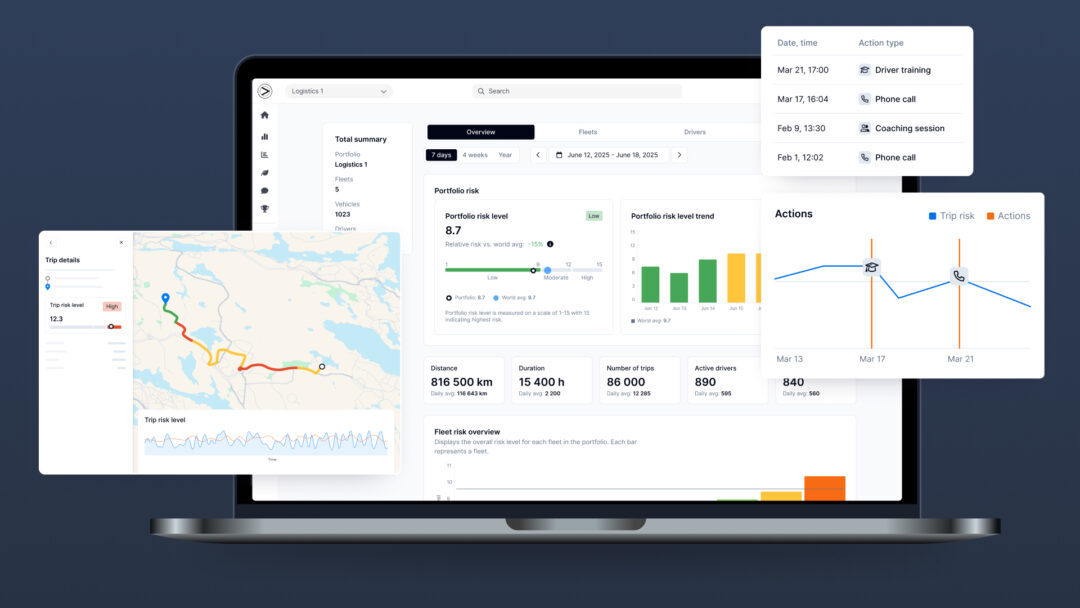
People are often surprised to see their data from a different perspective. Most companies within the mobility industry have a lot of driving data, but it’s when they see what’s possible with that data that the surprise comes. Seeing their driver population organized by risk level, and being able to view at-a-glance where risk is concentrated, is usually eye-opening to companies.
It’s usually their assumptions about what causes risk that change. Many companies I speak to are familiar with event-based scoring, so they naturally think about things like harsh braking or sudden acceleration. When they see predictive AI flag driving behaviors that are not necessarily associated with events, that’s usually when they realize there’s more to risk than they realized.
Companies tell me that the proof point for them is seeing how the AI flags risky behaviors they previously knew nothing about. They also find it valuable that they can see how behaviors affect risk both positively and negatively, because it’s important to many companies to recognize safe driving too.
In many conversations I have, it’s clear that events seem to be the most common way to view and measure risk. Some companies are nervous at first about a different approach. But once they learn that it’s not just about events, but about patterns in driving behavior, they realize how much was going unmeasured before.
No, and this is one of the most common questions I hear from companies before they get started. Predictive AI sits as a layer on top of existing solutions, rather than replacing them. Nothing a company already uses needs to be thrown away. Instead, they simply gain a new layer of insight on top of the systems and features they already like.
Many people already seem to be aware of the value of AI. It’s not a case of needing to educate people on why AI will make a difference to them – it’s about how they can implement it. They’ve already seen proof that it works through the validation and are keen to see how quickly they can achieve similar results in their own organizations.
No. It works as a layer on top of existing systems, adding deeper insights into driver risk.
Events only capture isolated behaviors that pass a certain threshold; not the ongoing behavioral patterns that better predict risk.
That the drivers flagged as highest risk are not always the ones they expected.