





 Most organizations managing a fleet assume their risk is broadly shared across their drivers. But data tells a different story.
After years of working with mobility organizations around the world, one finding consistently stands out: a small proportion of drivers account for a disproportionately large share of insurance claims. Understanding where risk is concentrated – and which drivers carry the most of it – is one of the most valuable things a fleet manager can know.
Here, Johan Forseke explains how risk is typically distributed across a fleet, how AI makes it possible to identify it, and what to do with that information once you have it.
Driving risk usually develops over time, shaped by habits, patterns and behaviors that build gradually. Because of this, it means risk can be detected as it builds – even before it would trigger traditional event-based alerts.
A driver who never exceeds the speed limit and never triggers a harsh brake event can still be identified as high risk. That’s because the behaviors that are indicative of crashes aren’t always the obvious ones. They might be subtle deviations from “the norm” that are only visible when you’re able to measure the right thing. Read how behavioral patterns predict crash outcomes.
Independent validation of Greater Than’s AI has reinforced just how concentrated fleet risk can be.
The validation confirmed a 25x differential in crash probability between the safest and riskiest driver profiles. This means that drivers categorized as highest risk are 25 times more likely to crash than those identified as lowest risk. This is a significant difference.
But not just that. The validation also confirmed that drivers identified as highest risk by our AI are 91 times more likely to be involved in a crash associated with a severe or major claim than those identified as lowest risk.
This has huge implications for fleet risk management. It shows that risk mitigation efforts don’t need to be applied in the same way across the board. In fact, it is much more effective to concentrate efforts where they have the potential to prevent the most serious, and costly, crashes.
While traditional telematics scores measure events that require a driver to pass a certain threshold, AI is different.
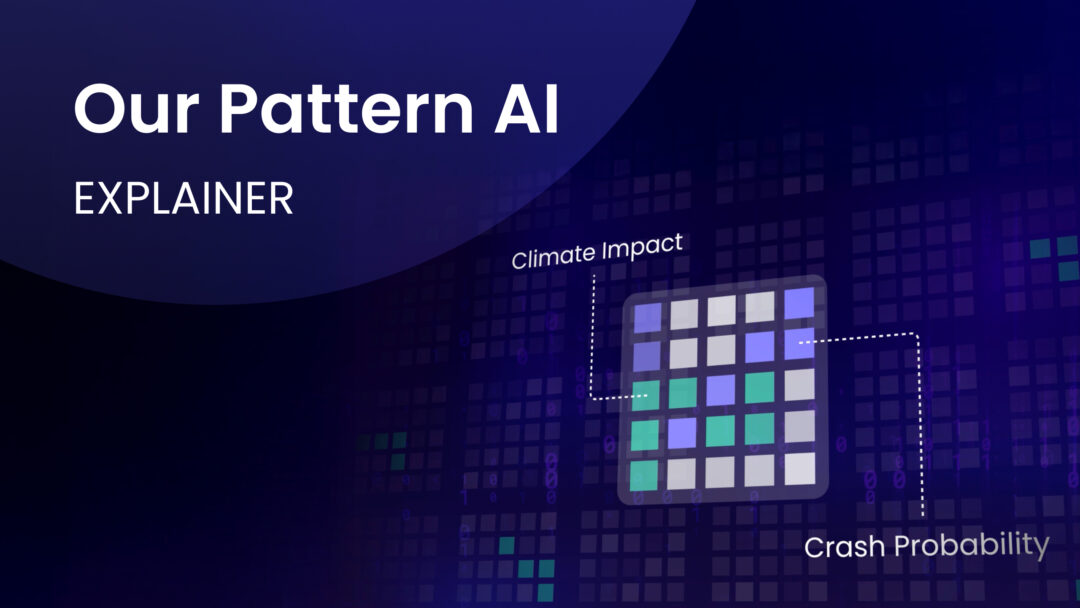
Greater Than’s pattern-based AI continuously analyzes driving behavior throughout entire trips, identifying patterns that it compares against a database of billions of real-world driving profiles linked to known outcomes. This makes it possible to calculate which drivers are most – and least – likely to be involved in a crash, based on the behavioral patterns the AI has seen before.
The result is a risk ranking across an entire driving population; rather than a list of drivers who have triggered event alerts. Watch a video to see how pattern AI works.
The identification of the highest-risk drivers is just one part of the overall picture. It’s what fleet managers do with the information that matters most.
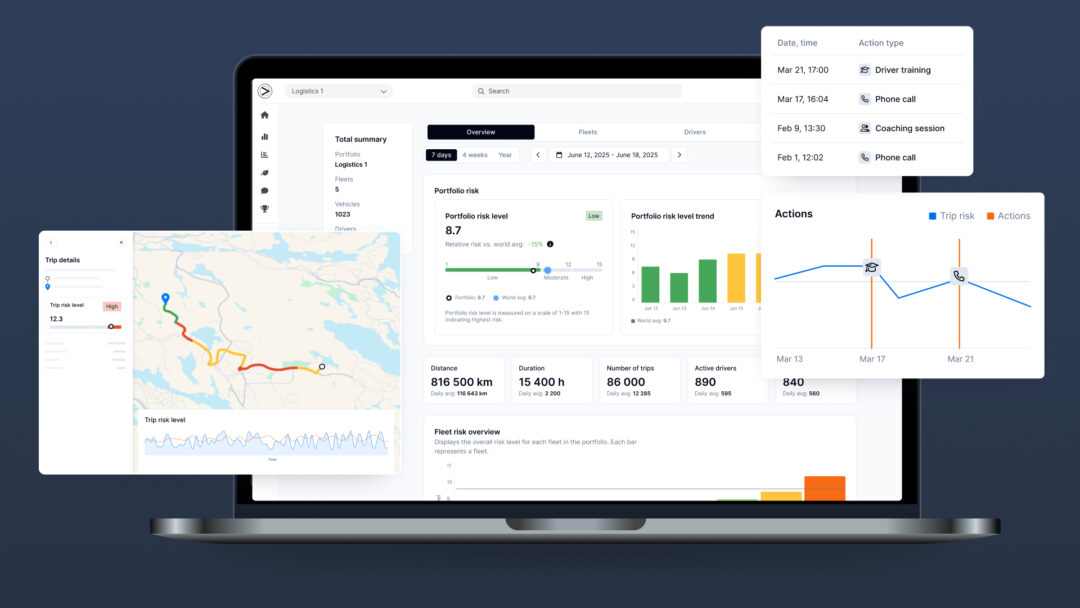
Typically, I see this type of actionable intelligence used to prioritize coaching or training for the drivers who need it most. This means that, rather than roll out training to all drivers, organizations can save time and resources by targeting the top 5% or 10% highest-risk drivers, for example. This is likely to have a greater impact on claims than applying training more broadly. Read more about using AI to prioritize driver training.
All organizations are different, so the exact distribution of risk will vary.
However, as our AI validation has confirmed, drivers identified as higher risk are consistently associated with a disproportionate share of claims – across multiple continents, different vehicle types and different driver categories. This means that, while the risk concentration might vary, the principle behind it doesn’t.
Yes, and consistently so. Recent independent validation confirmed that our AI model successfully isolates a 25x differential in crash probability between the safest and riskiest driver profiles.
Drivers identified as highest risk by Greater Than’s AI are 91 times more likely to be involved in a crash associated with a severe or major claim than those identified as lowest risk.
Rather than measuring isolated events such as harsh braking or speeding, Greater Than’s AI continuously analyses driving behavior across entire trips. It identifies patterns in the behavior and compares them against a database of billions of real-world driving profiles linked to known outcomes, producing a crash probability for each driver. Read more about how the AI works.
Yes. Greater Than’s AI uses GPS data only, which means it works across different vehicle types, without requiring additional hardware. Read more about using AI to manage driver risk across mixed fleets.
Severe claims have the biggest impact on road safety and therefore working with the drivers most likely to be involved in these crashes is the most important for organizations.
Independent validation confirmed that drivers identified as higher risk by Greater Than’s AI are consistently associated with a disproportionate share of claims – across geographies, vehicle types and driver categories. The validation found a 25x differential in crash probability between the safest and riskiest driver profiles.