



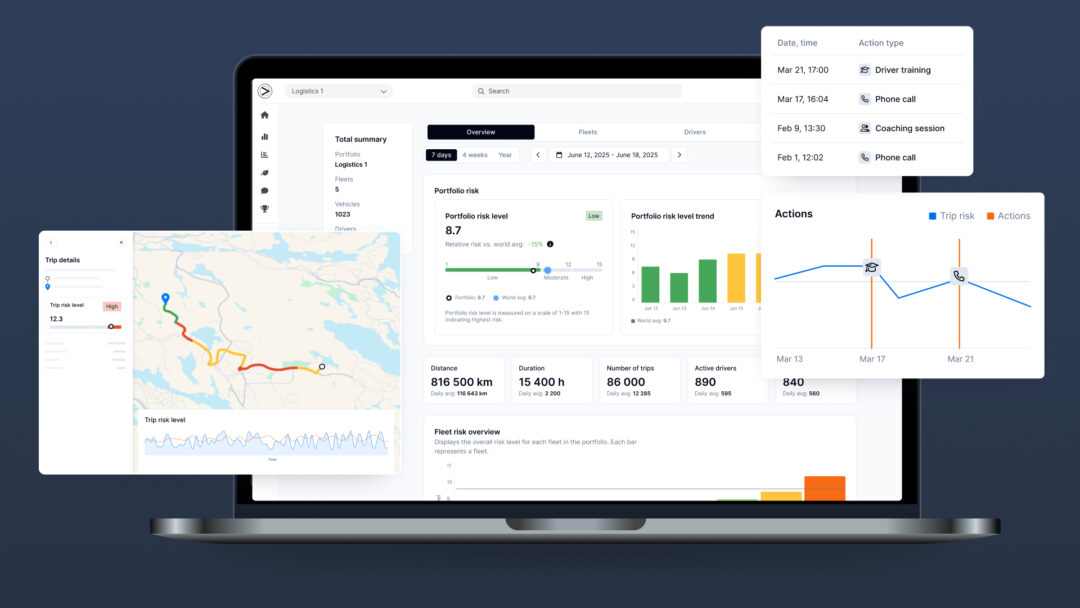




Imagine two drivers. Both operating the same type of vehicle on the same roads, over the same routes. Neither has any “events” logged – no instances of harsh braking, cornering or acceleration, and no speeding alerts. According to most risk management systems, they probably look identical. But one driver is significantly more likely to be involved in a crash.
Event-based scoring has been the foundation of driver risk management for years. It’s simple, logical and easy to explain. Yet, it has a major limitation – isolated events don’t predict crash probability. Patterns do.
Here, Anders Lindelöf explains what the mobility industry is currently missing when it comes to measuring driver risk – and how pattern-based AI fills the gaps.
On its own, no. While a pattern of repeated harsh braking can certainly be a contributor to risk, isolated instances don’t necessarily mean that a driver is more likely to crash. In fact, one harsh braking event could indicate the opposite of dangerous driving – a responsive driver reacting quickly to an unexpected hazard ahead, for example.
That’s why measuring isolated events doesn’t provide a full picture. Technology that analyzes entire trips across the full range of driving behaviors captures something that predefined event thresholds can’t.
Event-based scoring is exactly that; scoring based on predetermined event thresholds such as speeding, braking, acceleration and cornering. Yet, it raises some questions in terms of how events are weighted. For example, is a harsh acceleration more or less serious than a harsh brake? And how should a single minute of driving well above the speed limit compare with ten minutes of driving slightly above it? Without context, it can be difficult to determine the potential impact of a triggered event.
Pattern-based AI measures driver risk by continuously analyzing driving behaviors throughout entire trips – not just when drivers pass certain thresholds. These behavioral patterns are then compared against a database of billions of real driving profiles, each with known outcomes.
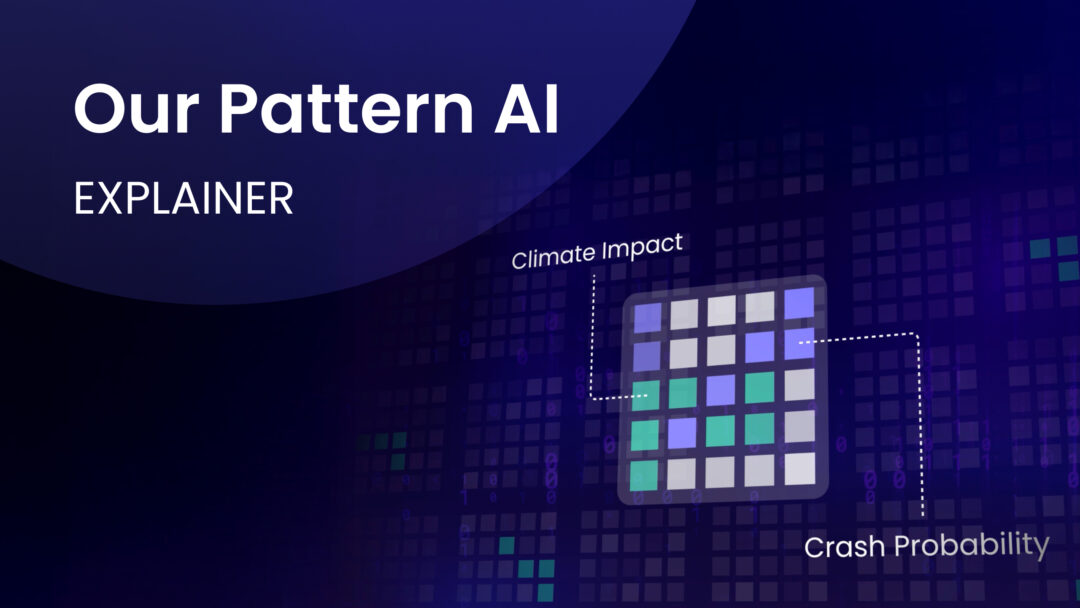
This makes it possible to calculate which drivers are most – and least – likely to be involved in a crash, based on how closely their patterns match those of drivers who have been. Watch our pattern AI explainer video.
Not necessarily. Greater Than’s predictive AI can be used to build entirely new products, but it’s also used to enhance existing telematics solutions – adding a predictive layer to standard scores. Our work with Navisaf is a good example of how this works in practice.
It starts with training. Our AI has been trained on real-world driving data from 106 countries, built up over many years.
We know that risky driving behavior isn’t random – it develops gradually, often beginning with slight deviations from a driver’s normal pattern that would never cross an event threshold. These small, repeated signals are exactly what pattern AI detects. Behaviors that might not mean much on their own but together make up a clear picture of risk.
Greater Than’s pattern-based AI has been independently validated for its scientific rigor and predictive power. The review confirmed that drivers identified as higher risk by the AI were consistently associated with a disproportionate share of claims – regardless of geography, vehicle type of driver category. Read more about the validation.
The mobility landscape is changing. Connected vehicles, autonomous features and shared mobility models are transforming the way people move – and raising the stakes for getting risk management right. Whatever form transport takes, it needs to be built on a solid foundation of risk management. Event-based scoring was a start, but we now have the technology for more powerful and actionable risk predictions.
Most driver risk solutions are built on event-based scoring that measures whether a driver passes a predefined threshold – for example, speeding, harsh braking or harsh acceleration. Greater Than’s AI is different in that it measures behavioral patterns throughout entire trips and compares these against a database of billions of profiles trained with real-world data.
Greater Than’s AI continuously analyzes GPS data throughout a driver’s trip, identifying patterns in their behavior. The patterns are compared against a database built from billions of real-world driving profiles across 106 countries, each linked to known outcomes. The result is a crash probability for each driver.
The most predictive approach to measuring driver risk is one based on actual crash outcomes rather than proxy indicators. Independent validation of Greater Than’s AI has confirmed its scientific rigor and predictive capabilities.
Yes. Greater Than’s AI uses GPS data only, which means it works across different vehicle types – including EVs, commercial vehicles and passenger cars – without requiring additional hardware. Independent validation confirmed consistent performance across different vehicle types, geographies and driver categories.
Greater Than’s AI measures risk consistently across any vehicle type.
AI makes it possible to predict risk before a crash occurs, rather than responding after the fact. Traditional event-based scoring can flag areas of concern, but it doesn’t predict crash probability.
Yes. Predictive AI provides actionable insights – meaning organizations can use it to identify which drivers to focus risk mitigation efforts on.